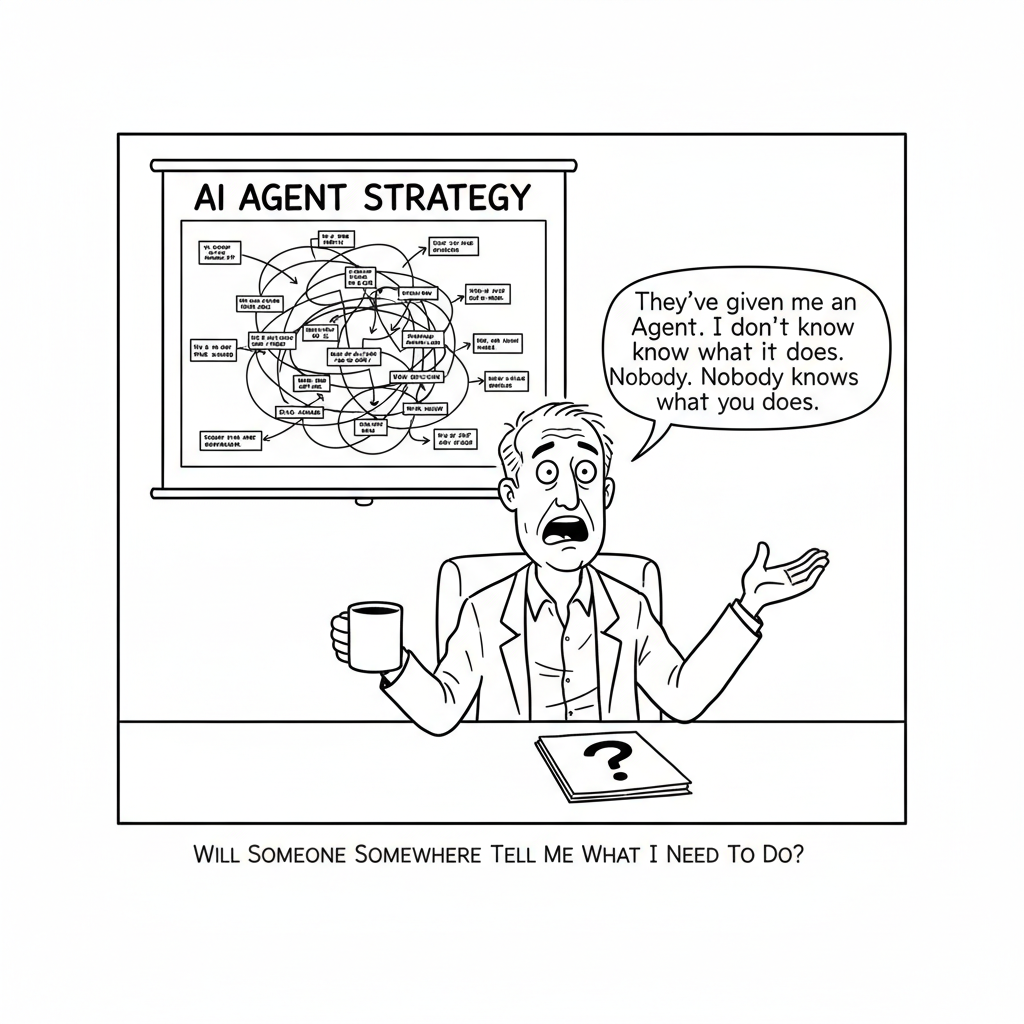
"They've given me an Agent. I don't know what it does. Nobody knows what it does."
AI Agents are the thing everyone in tech is excited about right now. An agent is an AI that doesn't just answer questions — it takes actions. It can browse the web, write files, send emails, and make decisions in a sequence without you clicking anything. In theory, it does a whole task while you make tea.
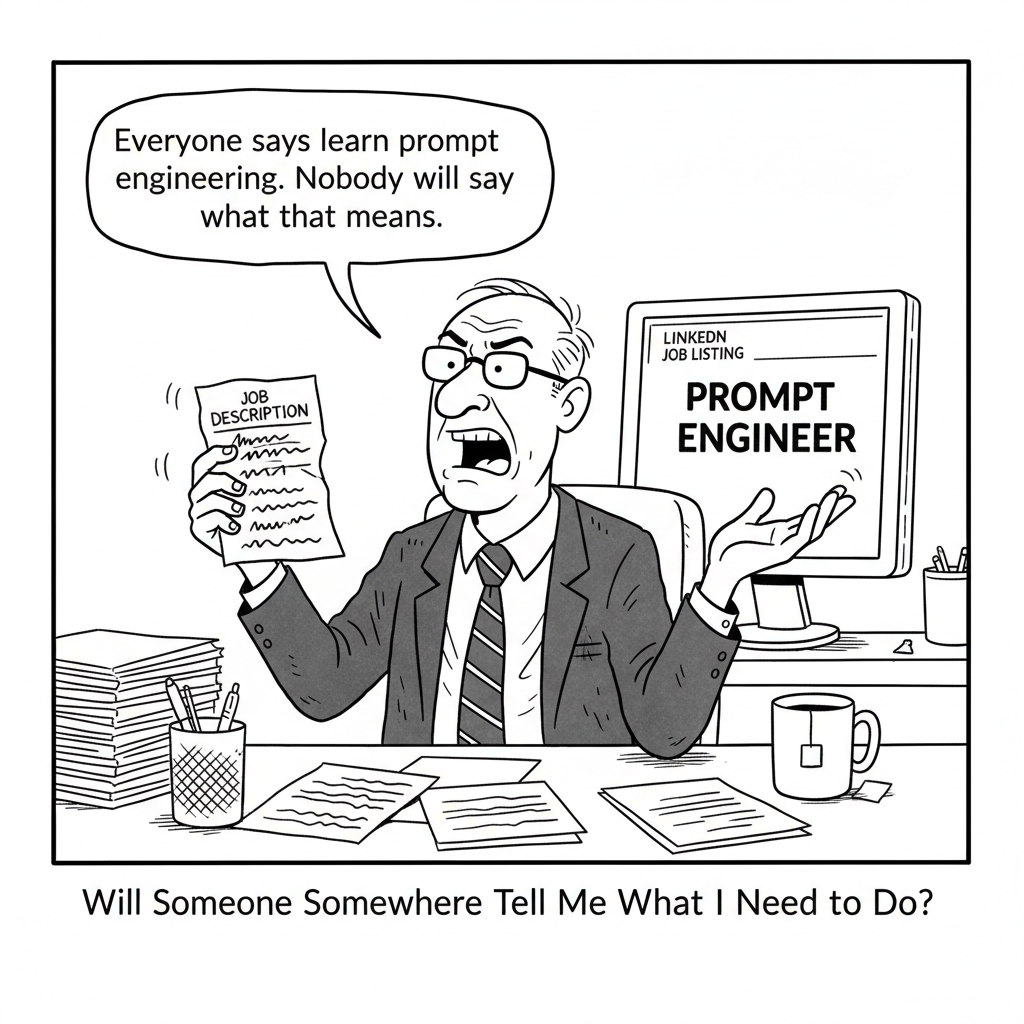
"Everyone says learn prompt engineering. Nobody will say what that means."
Prompt engineering has had quite a run. A year ago, job boards were filling up with listings. Tech journalists declared it the skill of the decade. And somewhere in the middle of all that, the actual explanation of what it is got lost.

"I've been writing prompts for forty years. We called it talking."
Prompt Engineering is the art of writing better instructions for AI. In 2023, it briefly looked like it might become a distinct profession. Companies posted jobs. Courses appeared. People added it to their CVs. The reality is messier.
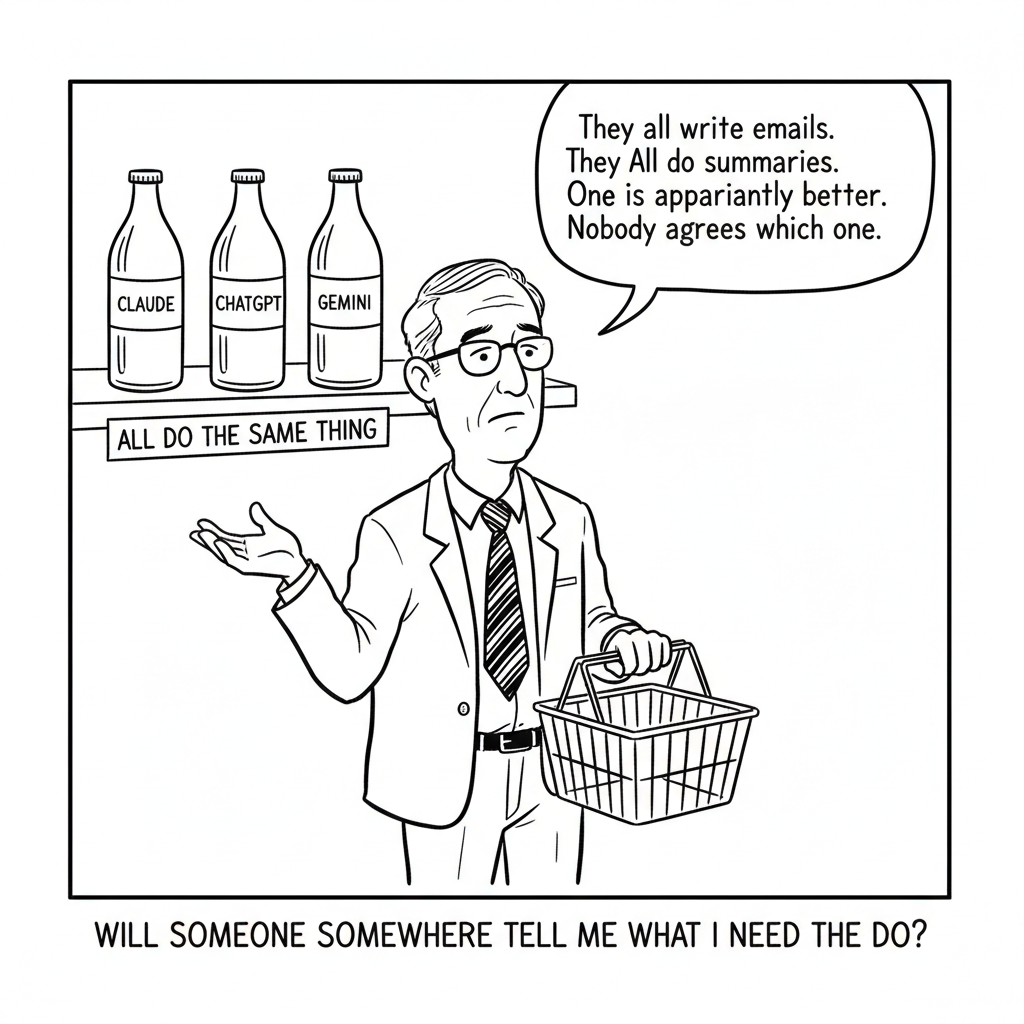
"They all write emails. They all do summaries. One is apparently better. Nobody agrees which one."
Claude, ChatGPT, and Gemini can all do the things you need done. Write a draft. Summarise a report. Answer a question. For everyday tasks, the differences between them are small. Anyone telling you one is dramatically superior is usually comparing edge cases, running benchmarks, or selling something.
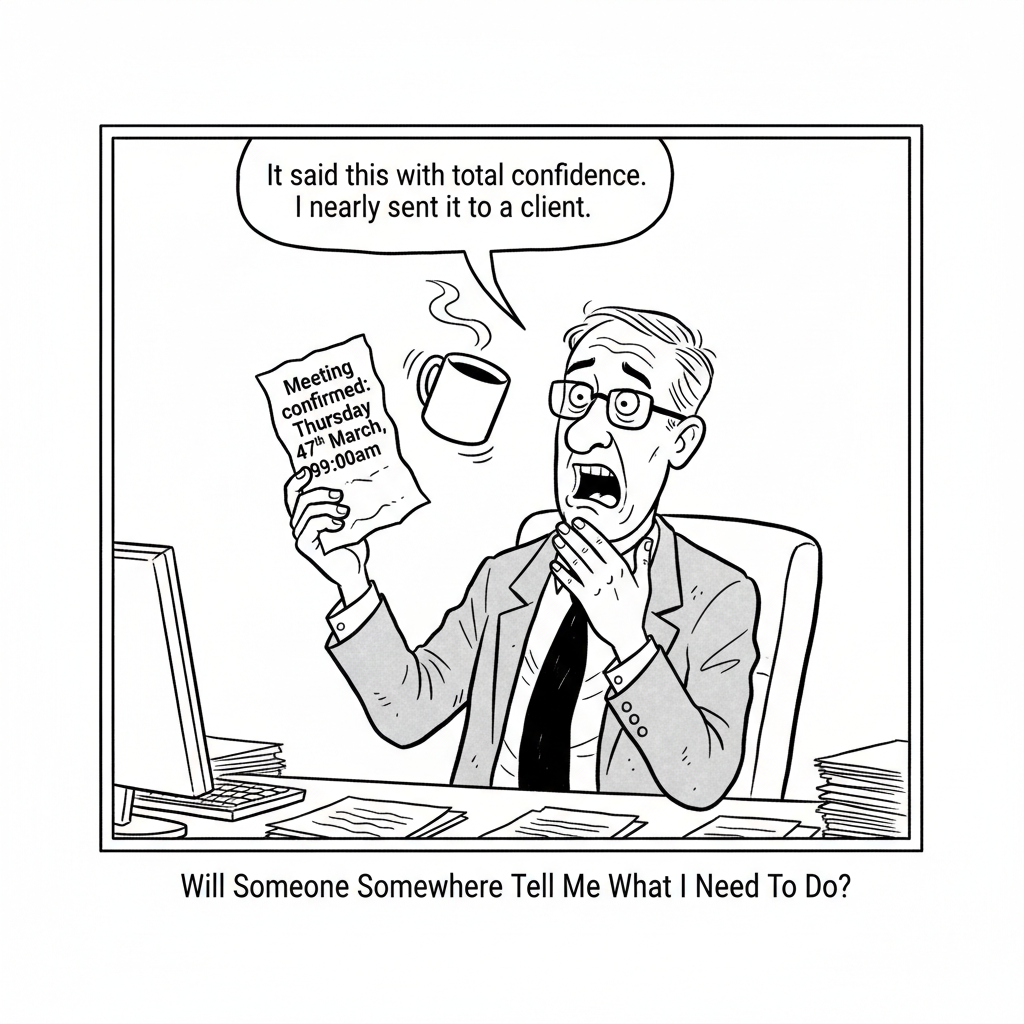
"It said this with total confidence. I nearly sent it to a client."
AI tools sometimes make things up. Not occasionally, and not because they are malfunctioning — it is a feature of how they work. They generate text that sounds plausible. They do not verify facts. They have no way to signal the difference between something they know and something they have constructed from patterns.
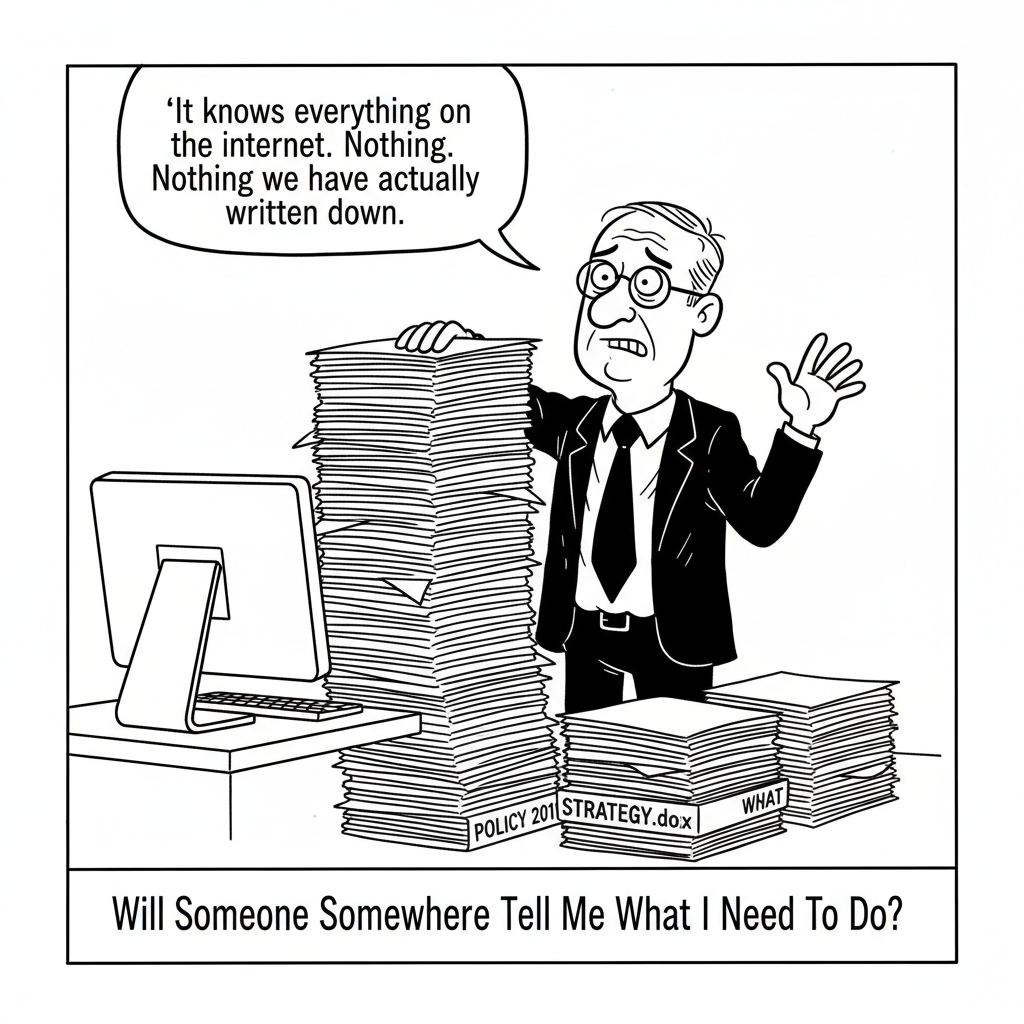
"It knows everything on the internet. Nothing we have actually written down."
Standard AI tools are trained on public data. They know a great deal about the world in general and nothing about your organisation in particular. Ask them about your leave policy, your pricing structure, or a project you finished last year, and they will guess or confess ignorance.
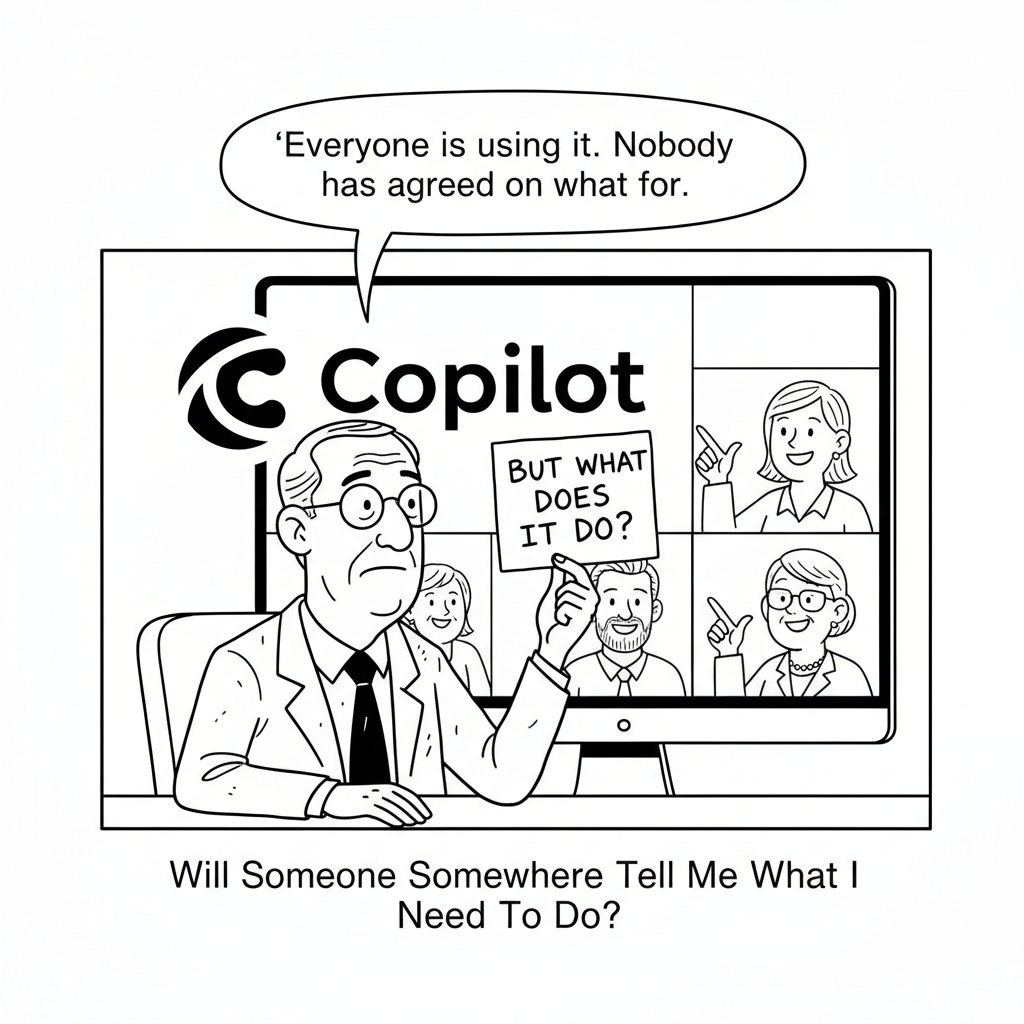
"Everyone is using it. Nobody has agreed on what for."
Microsoft Copilot is AI built into Microsoft 365. It sits inside the tools you already use — Word, Excel, PowerPoint, Teams, Outlook. It can draft emails, summarise documents, recap meetings, and answer questions about your files. The features that work most reliably are the ones built into specific applications.
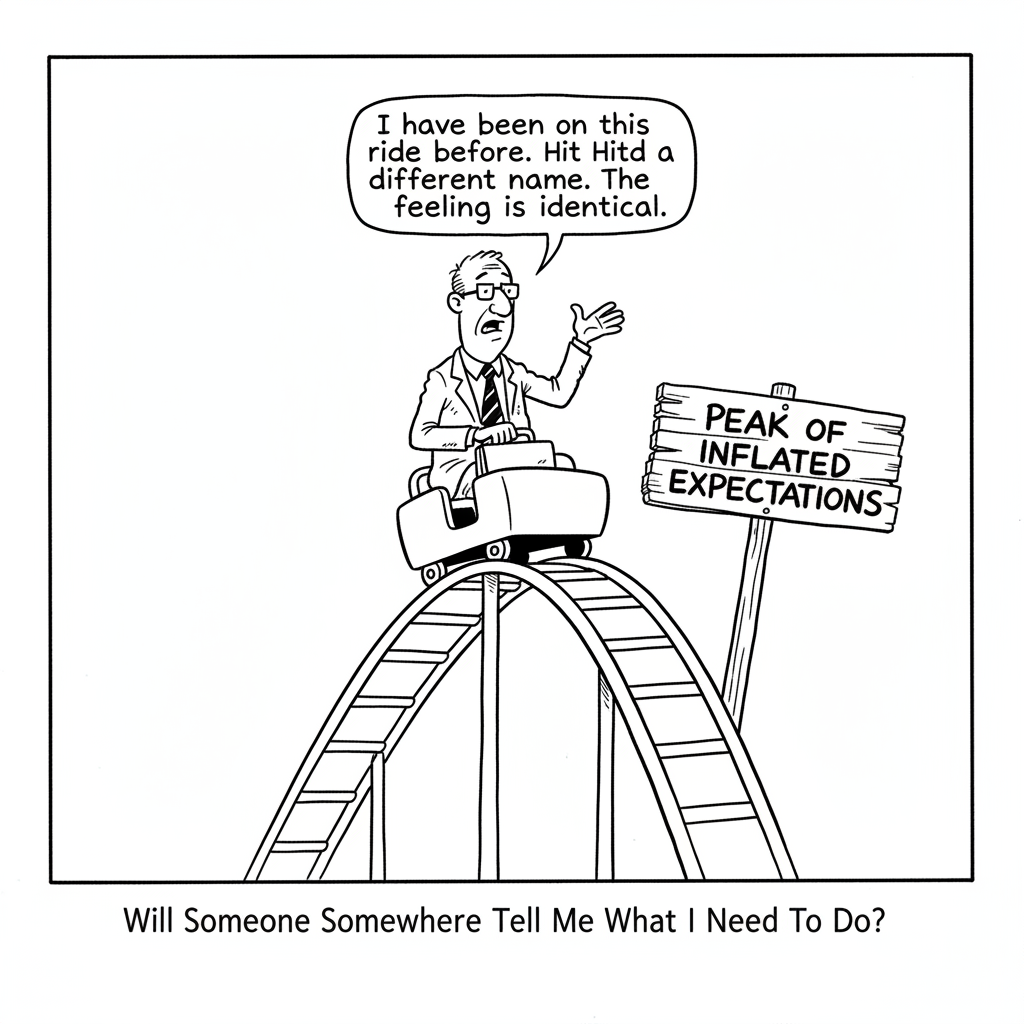
"I have been on this ride before. It had a different name. The feeling is identical."
We are somewhere near the top of the hype curve. Every week brings a new announcement, a new claim, a new round of euphoria or anxiety. We have been here before — with the internet, with big data, with blockchain. The pattern is familiar. The practical work is deciding which parts of the current capability are real and usable now.
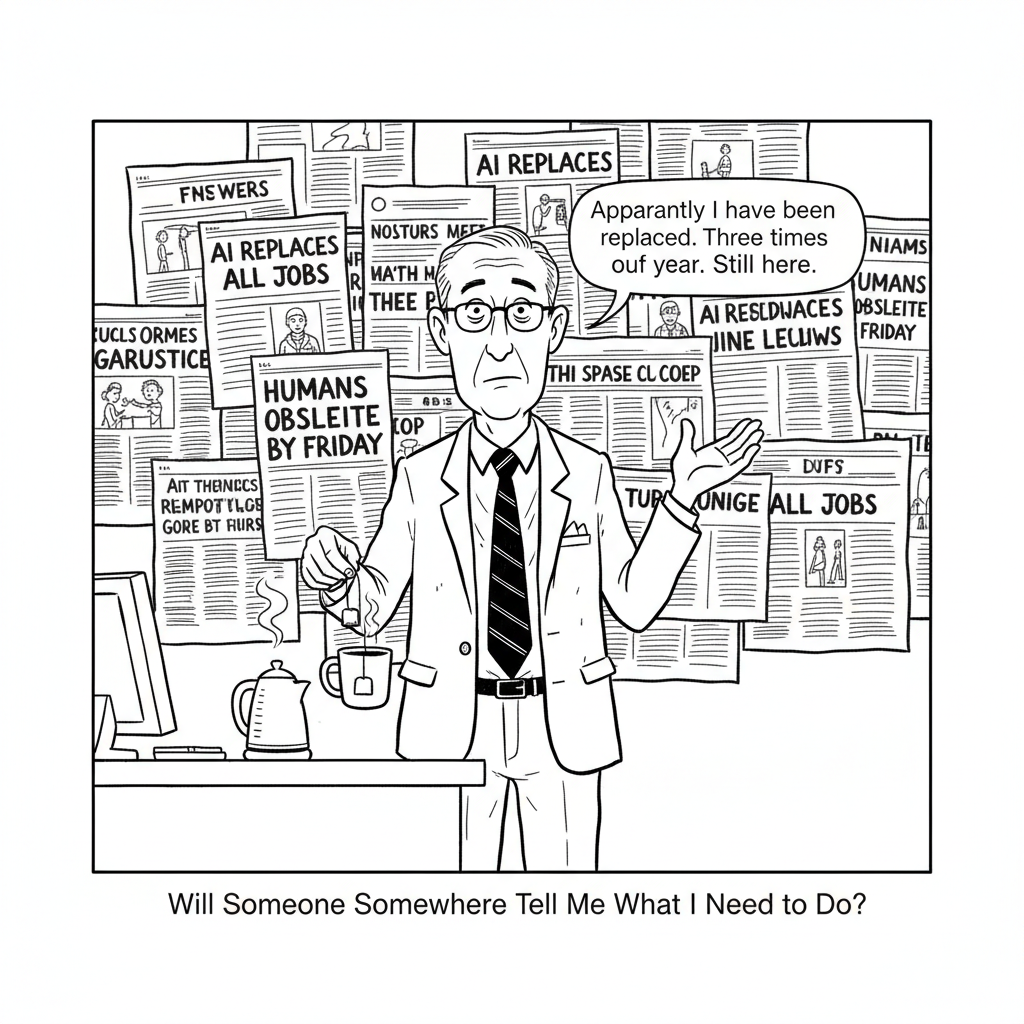
"Apparently I have been replaced. Three times this year. Still here."
The headlines say AI is replacing jobs. Some of them are right. Most are describing something narrower and slower than they make it sound. What is actually happening: AI is automating specific tasks within jobs — the most routine, the most measurable, the most digital. The job itself tends to stay.
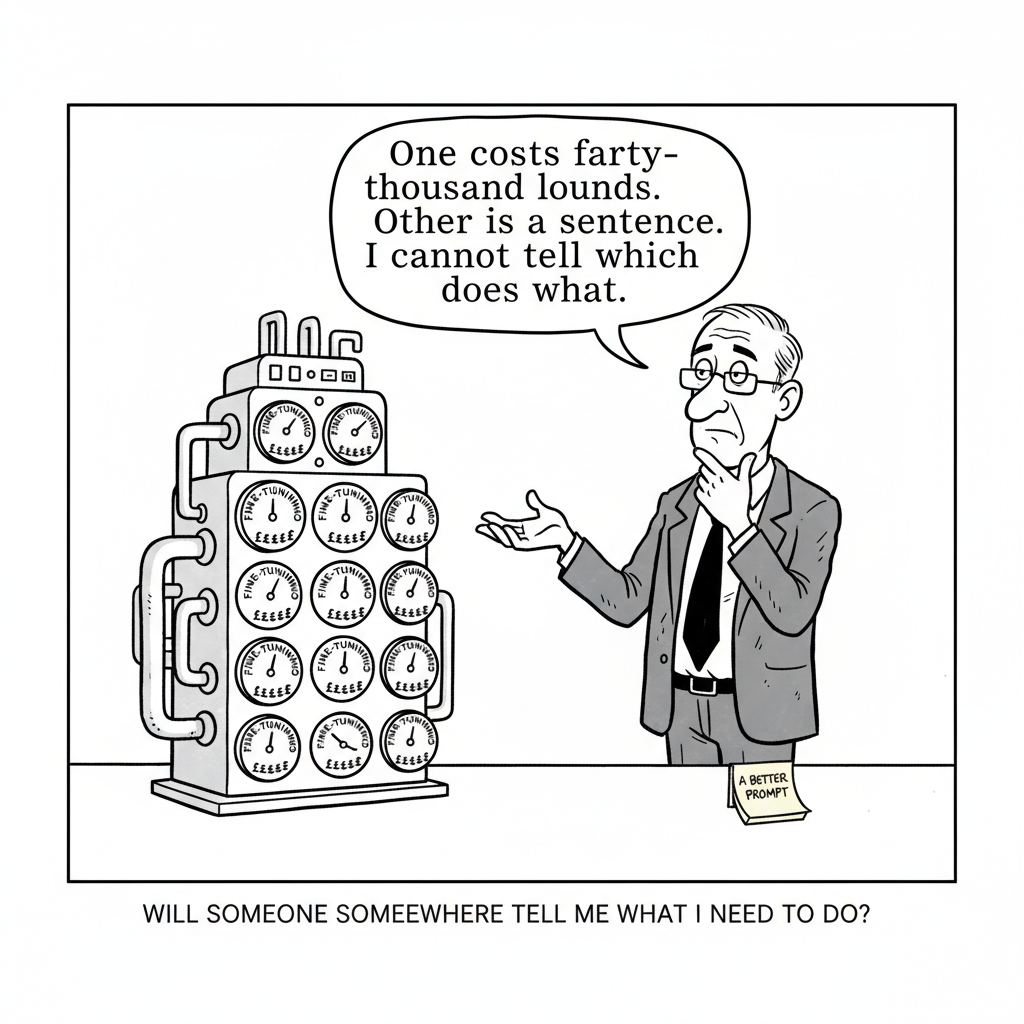
"One costs forty thousand pounds. The other is a sentence. I cannot tell which does what."
Fine-tuning and prompting are both ways of shaping what an AI model produces. They are not the same thing, and most people who ask about fine-tuning do not actually need it. A well-written prompt tells the model who it is, what it should produce, what format to use, and what to avoid. It can do an enormous amount of work.
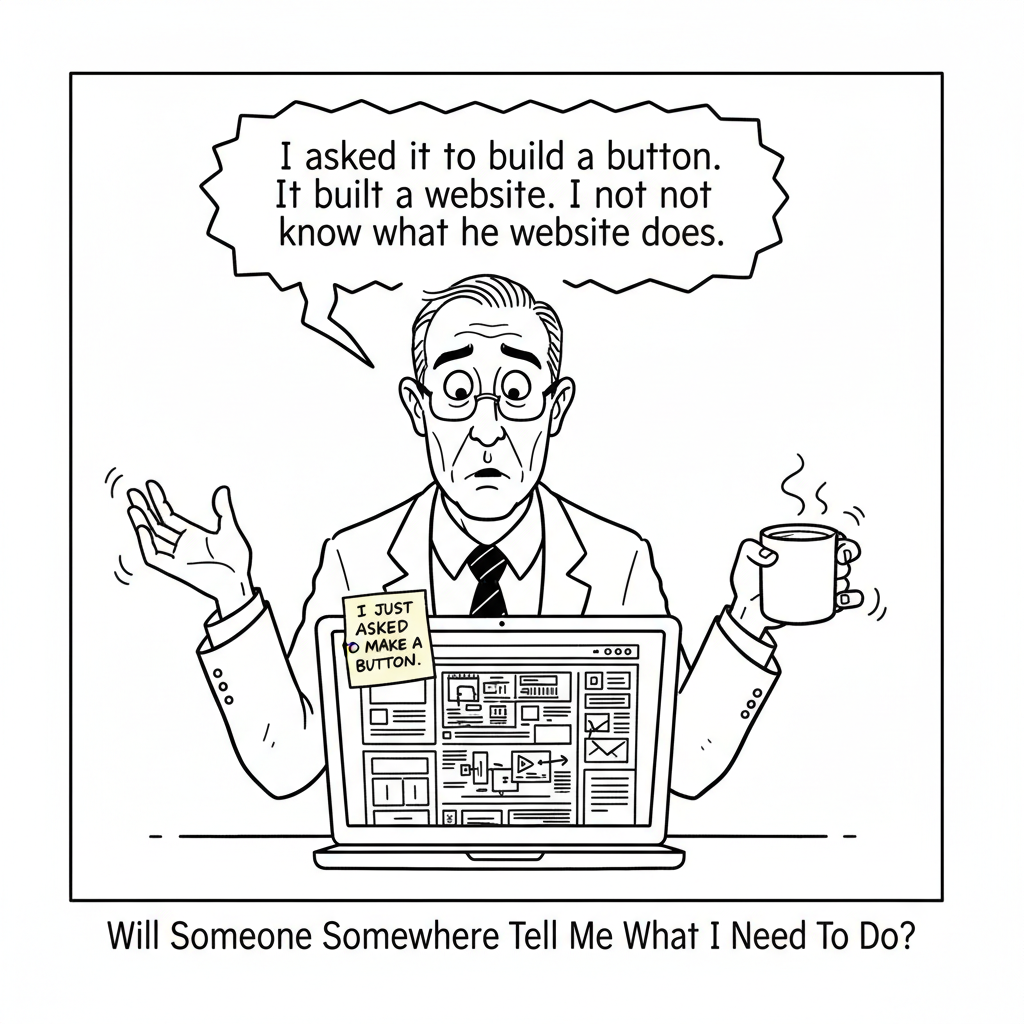
"I asked it to build a button. It built a website. I do not know what the website does."
Vibe coding is what happens when you describe software in plain language and an AI writes the code for you — without you needing to understand the code it produces. It works. Often surprisingly well. The problem is not that the code does not work at first. The problem is what happens when it breaks.
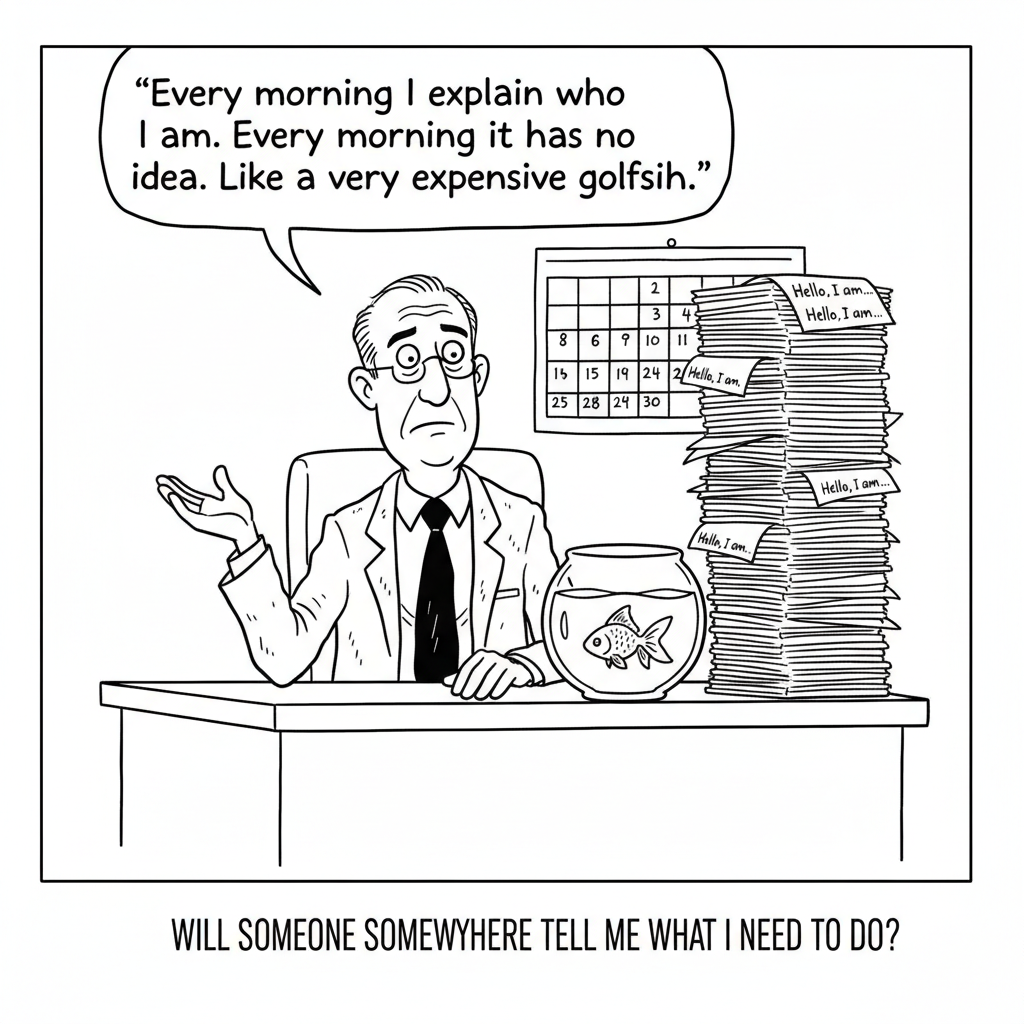
"Every morning I explain who I am. Every morning it has no idea. Like a very expensive goldfish."
Most AI tools have no persistent memory between sessions. Every conversation starts fresh. The model has no idea who you are, what you have discussed before, or what context makes your situation specific. This is not a bug — it is a deliberate design choice related to privacy and the cost of storing context at scale.
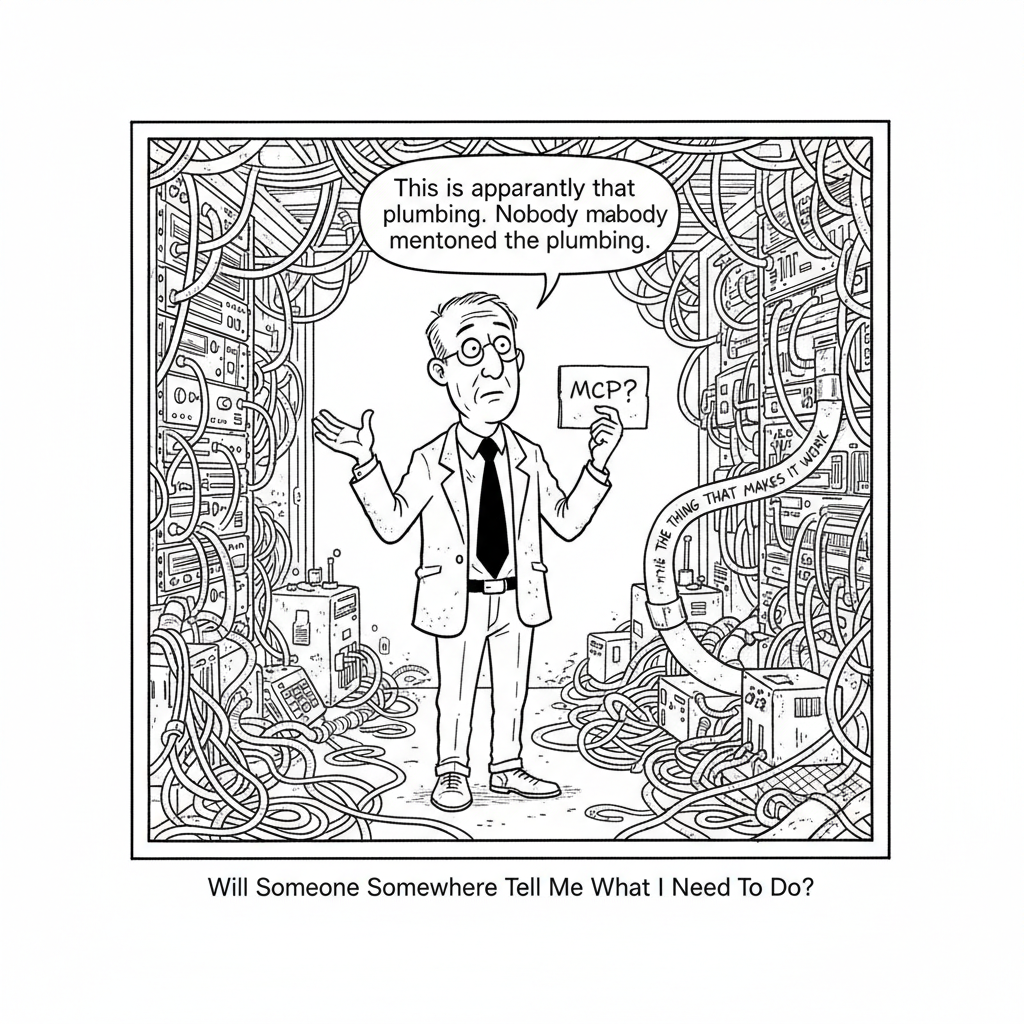
"This is apparently the plumbing. Nobody mentioned the plumbing."
MCP — Model Context Protocol — is a standard developed by Anthropic that lets AI tools connect to external systems: files, databases, APIs, applications. Think USB. Before USB, every device needed its own connector. MCP is attempting something similar for AI integrations. Most users will never interact with it directly. You will benefit through the tools built on it.