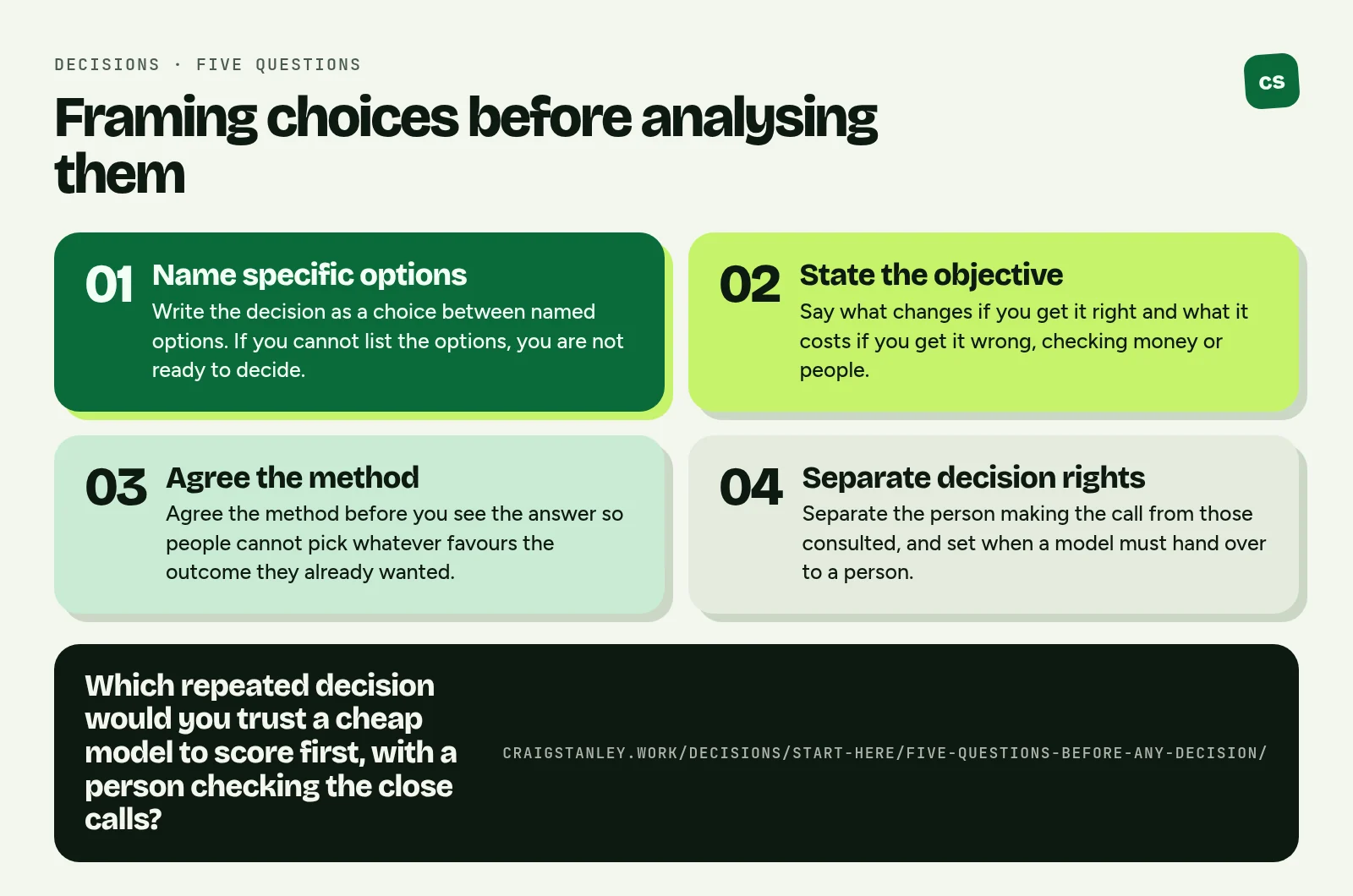
Before you choose something, ask five little questions. What am I choosing? Why? When does it need doing? How will I choose? Who gets a say?
Most bad decisions at work go wrong before anyone weighs the options. Nobody agreed what was being decided, or by when, or who had the final say. Five quick questions fix that.
Frame the decision before you analyse it. Agree the options, the objective, the deadline, the method and the decision rights. Write the answers into the decision record so the framing can be audited later.
Listen to this page
Read the transcript
From Craig Stanley's site: the article Five questions before any decision. Craig argues that five questions taking two minutes stop most bad work decisions before they start. The core advice is simple: frame the choice before you analyse it. First, write the decision as a choice between named options. If you can't list options, you aren't ready to decide. Second, state why it matters. Check whether the choice saves money, makes money, or looks after people. Third, name the deadline and note what would bring it forward. Every decision has a last sensible moment before the choice gets made for you. Fourth, agree the method before seeing the answer, whether that means a vote, a scoring sheet, or a model recommendation with someone signing off. That stops people picking methods that favour their preferred result. Finally, separate the person who makes the call from those consulted, and define when a model must hand over to a person. Writing these answers into the decision record lets you audit the framing later. Which repeated decision would you trust a cheap model to score first, with a person checking the close calls?
Summary written and read aloud with Google Gemini from the text on this page. The voice is synthetic. Longer episodes are in the podcast.
1. What exactly are we deciding?
Write the decision as a choice between named options. "Should we use AI in finance?" is a topic. "Do we licence Copilot for the twelve people in accounts payable this quarter: yes, no, or pilot with four?" is a decision.
If you can't list the options, you're not ready to decide. You're ready to find options.
2. Why does it matter?
Say what changes if you get it right and what it costs if you get it wrong. This is where the three goals come in: does this decision save money, make money, or look after people? If it does none of these, ask why it's on the agenda.
3. When does it need making?
Every decision has a last sensible moment. Decide too early and you miss information that would have helped. Decide too late and the choice gets made for you. Name the date, and name what would bring it forward.
4. How will we decide?
Agree the method before you see the answer. That might be a vote, a scoring sheet, a model's recommendation with a person signing off, or one person's judgement. Agreeing it first stops people picking the method that favours the answer they already wanted.
5. Who decides, and who gets a say?
Separate the person who makes the call from the people who are consulted and the people who are told afterwards. If a model is involved, say what it's allowed to do on its own and when it has to hand over to a person. The page Act, ask a person, or stop covers this.
Using the questions
Put the five answers at the top of the decision record. It takes two minutes. When you look back in six months, you'll know what you were trying to do, which is most of what you need to judge whether you did it.